Explorer le portail

Recherche

Trouvez les contenus, ressources et rendez-vous publies par RECA.

Lunar exploration

Participation in the radio monitoring of Artemis II

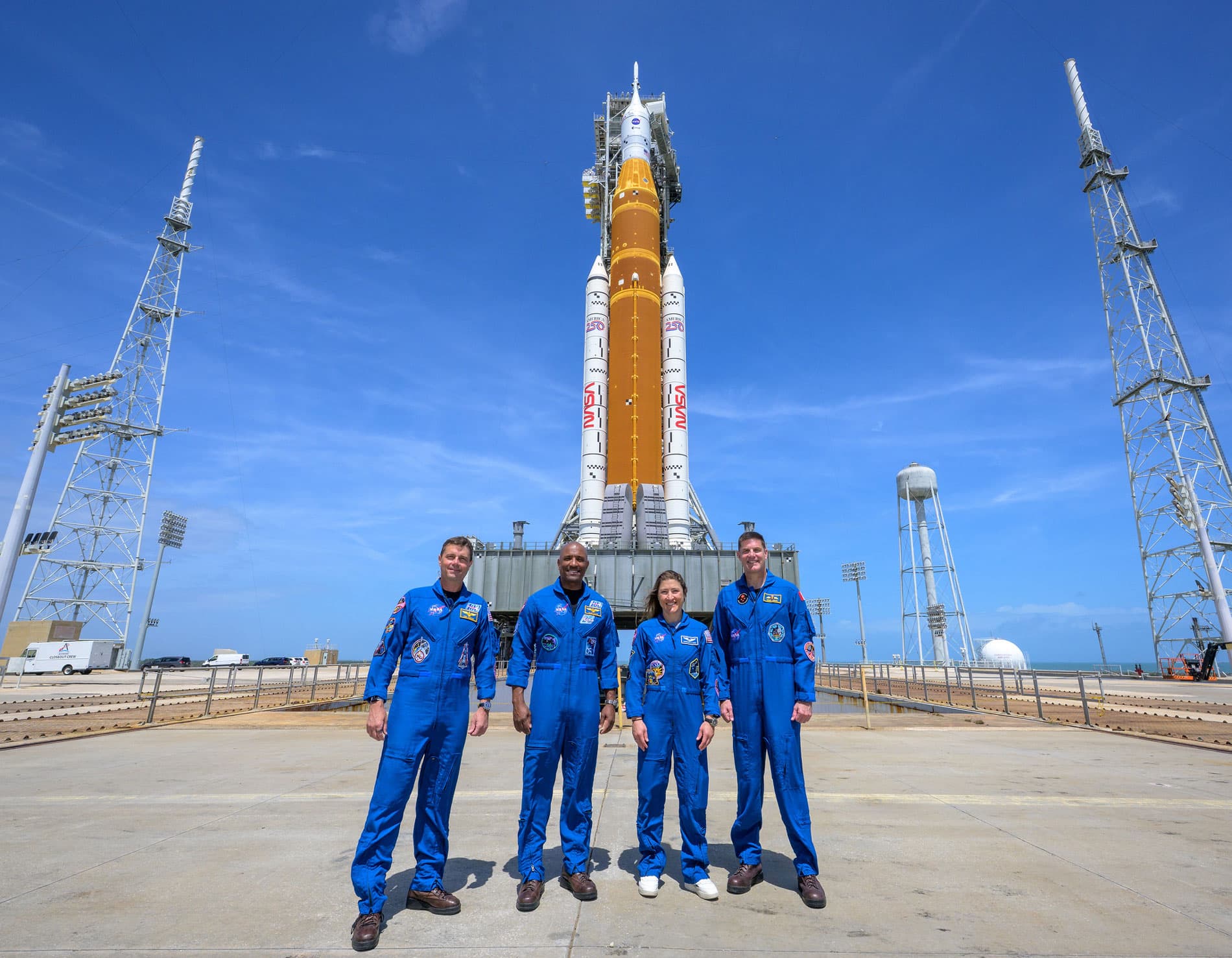
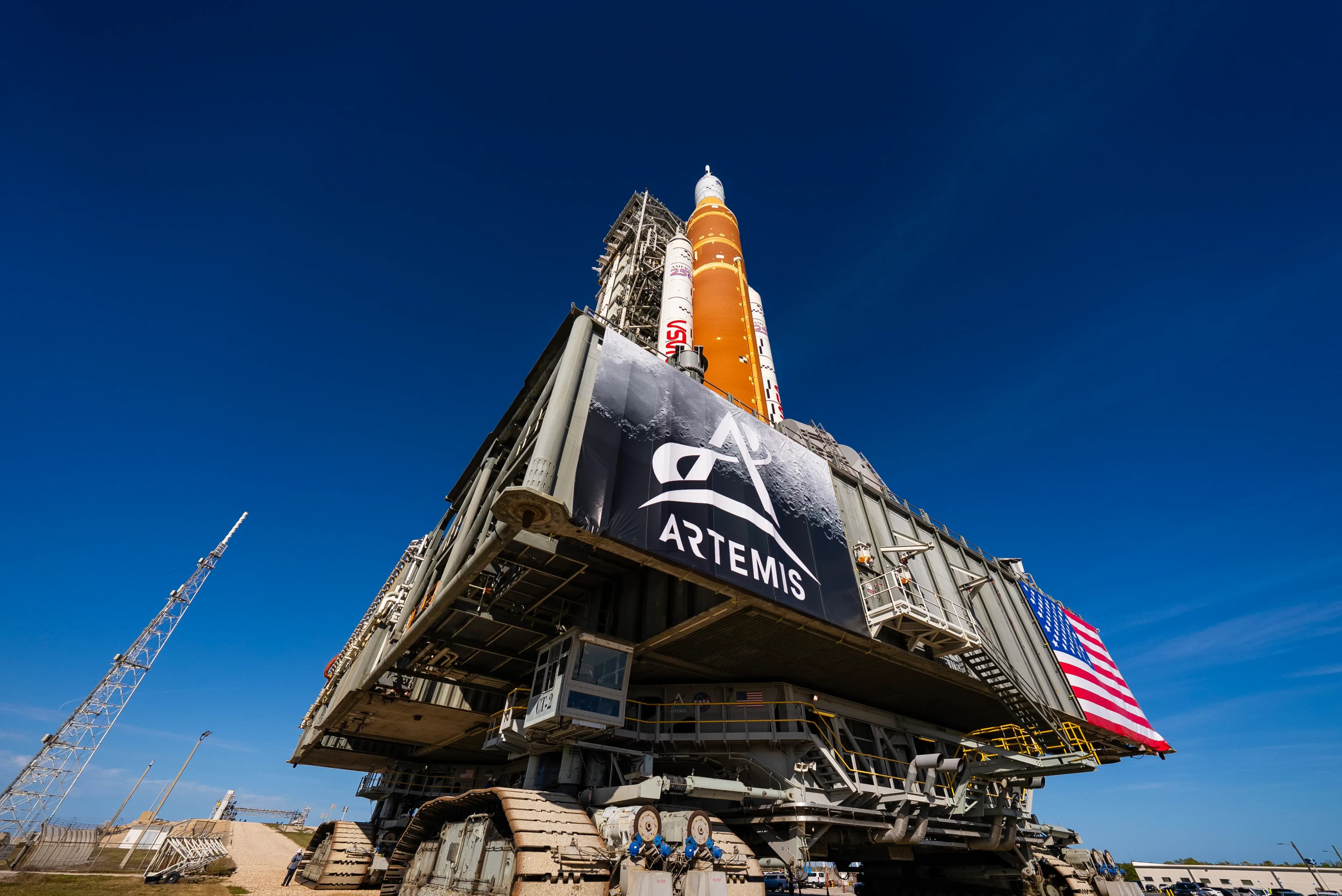
RECA and the University of Douala have been selected by NASA for a global initiative to passively monitor Orion.Artemis II will fly from 1 to 10 April 2026.

Satellite systems

RSA-1, observation demonstrator, which is capable of observing the Earth's atmosphere.

A nanosatellite programme aims to develop sovereign competencies in tropical observation and orbital operations.

Infrastructure and infrastructure

African network in outer space

A roadmap to federate African radio stations and support future lunar and interplanetary missions.

Centre of excellence

Human space flight

Research, training and human factors to prepare the next generation of African operators and astronauts.

Centre of excellence

Satellite systems

Design of platforms, payloads, ground segments and data mining tools.

Centre of excellence

Propulsion forward

Studies on electric propulsion, test benches and interplanetary mission architectures.

Centre of excellence

Space science

Radio astronomy, observation of the Sun, exoplanets and analysis of open data.

Centre of excellence

Education and talents

Workshops, mentoring and challenges to make space careers accessible.

Centre of excellence

Observation of the Earth

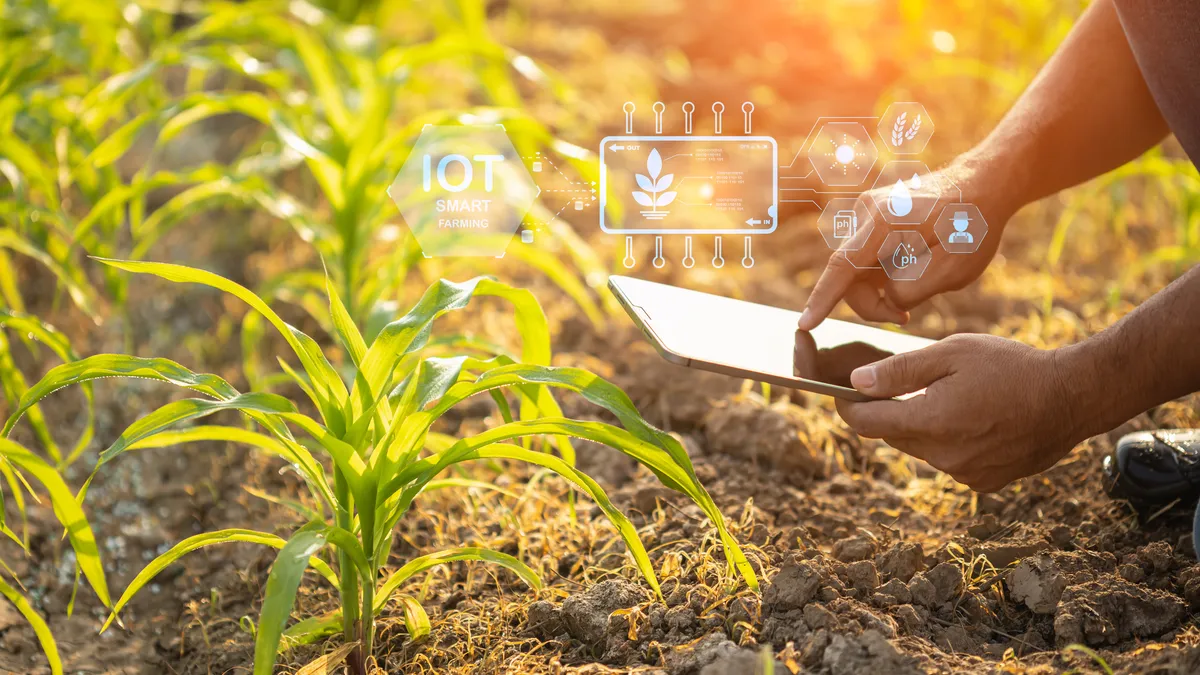
Transform spatial data into useful tools for climate, cities and agriculture.

Centre of excellence

Space robotics

Autonomous systems, educational rovers and prototypes for harsh environments.

Centre of excellence

Space communications

Radio reception, signal processing and resilient communication infrastructures.

Mission

RECA selected to contribute to the monitoring of Artemis II

NASA has selected a RECA team and University of Douala among 34 global participants in the passive monitoring of Orion.

The event

Back to the NASA Space Apps Challenge Douala 2025

Multidisciplinary teams have turned open data into solutions for the Earth and space.

Organisation and organisation

A new space research facility in Douala

RECA is a collaborative space with the academic world around communications, data and prototyping.

The programme

RSA-1 enters the mission definition phase

The nanosatellite programme formalizes its objectives, use cases and technical partnerships.

The space

Understanding the orbital mechanics

Why a spacecraft doesn't just fly upwards: speed, gravity, transfers and orbit-keeping geometry.

SCIENCE

How observation satellites are transforming climate research

Repeated measurements from orbit reveal environmental changes on a scale that is not possible to measure with ground-based instruments alone.

I

The role of artificial intelligence in space exploration

From anomaly detection to autonomous navigation, machine learning is useful when its limits are designed with as much care as its capabilities.

The Commission shall be assisted by the European Parliament.

Ground stations in orbit: understanding space communications

A signal must travel the distance, the noise and follow a moving target before it becomes useful information on Earth.

Engineering

Why CubeSats are transforming access to space

Standardised dimensions have reduced the barrier to entry, but the success of a small mission still depends on rigorous system engineering.

I'm not going to tell you.

Reading the radio sky

Radio astronomy converts weak electromagnetic signals into maps of objects and phenomena invisible to optical telescopes.

Conference

The public briefing on Artemis II

Douala + broadcast online

Workshop

Satellite reception workshop

University of Douala

Hackathon

The NASA Space Apps Challenge is in Douala.

Registration is coming soon

The image

Radio tracking of Artemis II

RECA and the University of Douala are part of the worldwide network of volunteer stations selected by NASA to track Orion.

The image

RSA-1, observation demonstrator, which is capable of observing the Earth's atmosphere.

A nanosatellite programme aims to develop sovereign competencies in tropical observation and orbital operations.

The image

African network in outer space

A roadmap to federate African radio stations and support future lunar and interplanetary missions.

The file

Human space flight

Research, training and human factors to prepare the next generation of African operators and astronauts.

The file

Satellite systems

Design of platforms, payloads, ground segments and data mining tools.

The file

Propulsion forward

Studies on electric propulsion, test benches and interplanetary mission architectures.

Communiqué from the Commission

Participation of RECA in the passive monitoring of Artemis II

Communiqué from the Commission

Communiqué from the Commission

RECA is co-hosting the NASA Space Apps Challenge in Douala

Communiqué from the Commission

Press release

The Commission has launched the RECA 2030 scientific roadmap

Press release

Definition of

Mission architecture

Transform a scientific objective into requirements, orbital scenarios, ground segment and documented risks.

The analysis

Modelling and simulation

Evaluate trajectories, radio links, power and system behaviour before physical testing.

Laboratory

Scientific instruments

Prototyping of measuring chains, sensors, electronics and test benches suitable for the observed need.

Operations

Operations in the ground segment

Planning crossings, receiving signals, synchronising measurements and keeping a working record.

Data provided

The data processing

Calibrate, georeference and analyse observations to produce readable and reproducible results.

Engineering

Verification and testing

Test hypotheses, trace anomalies and verify each requirement before validating a system.

Documentation

Scientific publication

Document the methods, limits, references and shareable data behind each published result.

Transmission

Training through practice

Link courses, workshops and field projects to advance scientific and technical competencies.