A school may open a robotics club, photograph a room full of participants, and conclude that the problem of girls’ representation in science is solved. The photography may be sincere; the conclusion, however, is too hasty. A student still has to choose subjects, pass exams, pursue studies, find an internship, enter a profession, and be able to progress in it. Each step can lead to the loss of talent. To understand what is at stake in STEM – science, technology, engineering, and mathematics – one must follow a path, not just celebrate a one-off activity.
UNESCO uses the image of a “leaking pipeline” to describe these successive exits. In a study presented in February 2026 on STEM pathways in East Africa, the organization cites choices of subjects in schools, progression to higher education, entry into employment, and access to responsibilities. It would be incorrect to directly apply its findings to Cameroon: institutions, languages of instruction, labour markets, and material constraints differ. Rather, this study provides a framework of questions to be asked locally.
What the data say — and what they don't
On a global scale, UNESCO estimates that women make up about 35% of STEM graduates. This figure describes a global distribution. It does not indicate the proportion of girls in a high school in Douala, nor the number of female space engineers in Central Africa, nor the proportion of students who would have liked to enter a STEM field but were unable to do so. To produce a useful diagnosis, it is necessary to ask which population each figure refers to: enrolled students, applicants, graduates, interns, employees, or established researchers.
Another challenge is that STEM disciplines do not form a uniform block. Mathematics, computer science, life sciences, and engineering attract different audiences and lead to different jobs. A national average may mask a relatively balanced laboratory and an electrical engineering department that is almost exclusively male. Conversely, a high female presence in a program does not guarantee access to equipment or career opportunities. Therefore, numbers must be cross-referenced with the quality of the educational experience.
The report on secondary education in Africa, referenced by the UNESCO and ADEA platform, highlights problems of resources, curricula, teacher training, and policy evaluation. Again, it examines several countries and does not replace a Cameroonian survey. But it does point out that the absence of a girl in a laboratory is not solely due to a lack of "motivation." Scientific activity also depends on class time, available instruments, travel safety, information about careers, and the way adults respond to questions.
The first step: daring to choose and be able to learn
A student may love physics but doubt that it is the right path for them. Stereotypes emerge early: certain technical tasks are more naturally assigned to boys, while girls are asked to take notes or present the project. This division may seem inconsequential during a class session; repeated every week, it unevenly distributes the hands-on experience of programming, measuring, or troubleshooting.
A club can operate at this level with simple rules: rotation of roles, individual time to manipulate, written documentation by each participant, explicit right to make mistakes, and evaluation of reasoning rather than just the final demonstration. The presence of a researcher or technician as a mentor can make a journey visible. It should not be used as decoration in a poster: a useful meeting includes real difficulties, studies pursued, travel costs, and opportunities available.
Teacher training remains central. Equipment purchased without proper guidance often ends up in a closet. Conversely, a teacher who can transform everyday objects into rigorous experiments can convey the scientific process with few resources. You can measure the length of a shadow throughout the day, analyze rainfall from open data, or build a small sensor, provided you formulate a hypothesis, note uncertainties, and discuss measurement errors. STEM doesn't start with an expensive miniature satellite.
The second step: enter university and stay there
The transition to higher education introduces other obstacles. One needs to know the different fields of study, meet the prerequisites, finance one's studies, and sometimes move to another city. An awareness campaign that ignores these constraints may generate enthusiasm without changing enrolment. Institutions should track not only applications but also admissions, first-year success, dropouts, and reorientations, while respecting student confidentiality.
Once enrolled, a student may lack access to research projects, a personal computer, or a network of contacts. Practical work and internships must be distributed according to public criteria. Mentoring should be structured: specific objectives, regular meetings, feedback on work, and the possibility of changing mentors in case of problems. A one-off "inspiration" is no substitute for someone who reviews a dossier, explains a job application, and opens the door to a laboratory.
UNESCO also emphasizes the combined effect of gender with geography, income, or the fragility of the context. The same measure will not have the same effect for an urban student with a stable connection and for a student far from a well-equipped institution. Thinking about inclusion therefore requires looking at who actually participates in the completion of a programme, not just who was invited in the first place.
The third stage: from degree to profession
A degree does not guarantee a scientific job. Laboratories, agencies, start-ups and administrations may require experience that students have not had the opportunity to acquire. In the space sector, the range of jobs is broader than the image of the astronaut: satellite data analysis, electronics, radio frequencies, embedded software, meteorology, cartography, maintenance or scientific communication. Making these paths visible helps to choose a training and an internship that are consistent.
Employers also have a verifiable responsibility: to publish recruitment criteria, to pay for internships when possible, to prevent harassment, and to monitor promotions. If women enter a sector but leave technical positions before advancing to leadership roles, recruitment efforts are not enough. The UNESCO study in East Africa specifically focuses on transitions to leadership, not just on entry into a course of study.
For a regional project, the best strategy is not to announce a universal solution. It consists in choosing a measurable breaking point. A university can improve access to internships; a high school, the distribution of manipulations; a club, loyalty beyond the annual competition; a company, the transparency of its promotions. Each actor can define a starting indicator, a limited intervention, and a date for evaluation.
A concrete protocol for RECA and its partners
Before launching a STEM program, a voluntary and anonymous survey could be conducted in a few partner schools: who chooses the science options, who uses the instruments, who continues the activity six months later? The data should be aggregated sufficiently to not expose individual students. A qualitative survey – interviews with participants, teachers, and parents – would help to understand the reasons behind the numbers.
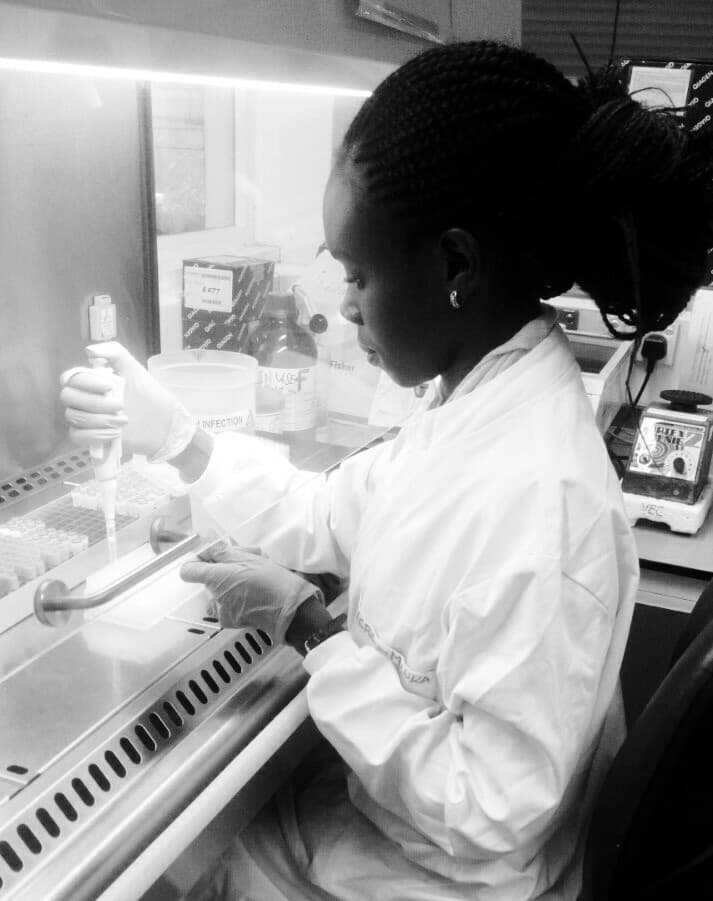
Then there would be a short but sustained experiment: a ten-week project cycle, with rotating roles, two technical mentors, equipment loans, and public presentation of results. One project might analyze a set of open satellite images; another might compare temperature sensors at different locations on campus. At the end, one would not only count the projects submitted, but the skills acquired, the confidence in handling the equipment, and the enrollment the following year. Negative results would also be useful: they would indicate what needed to be changed.
This approach does not promise to eliminate all inequalities. It transforms a generous ambition into a scientific and educational question that can be examined. More girls in STEM is not just a statistic to improve; it is the possibility that more educated people will contribute to solving the climate, health, energy, communication, and observation challenges of our region. To achieve this, we must make the entry points visible – and repair those that close afterwards.