
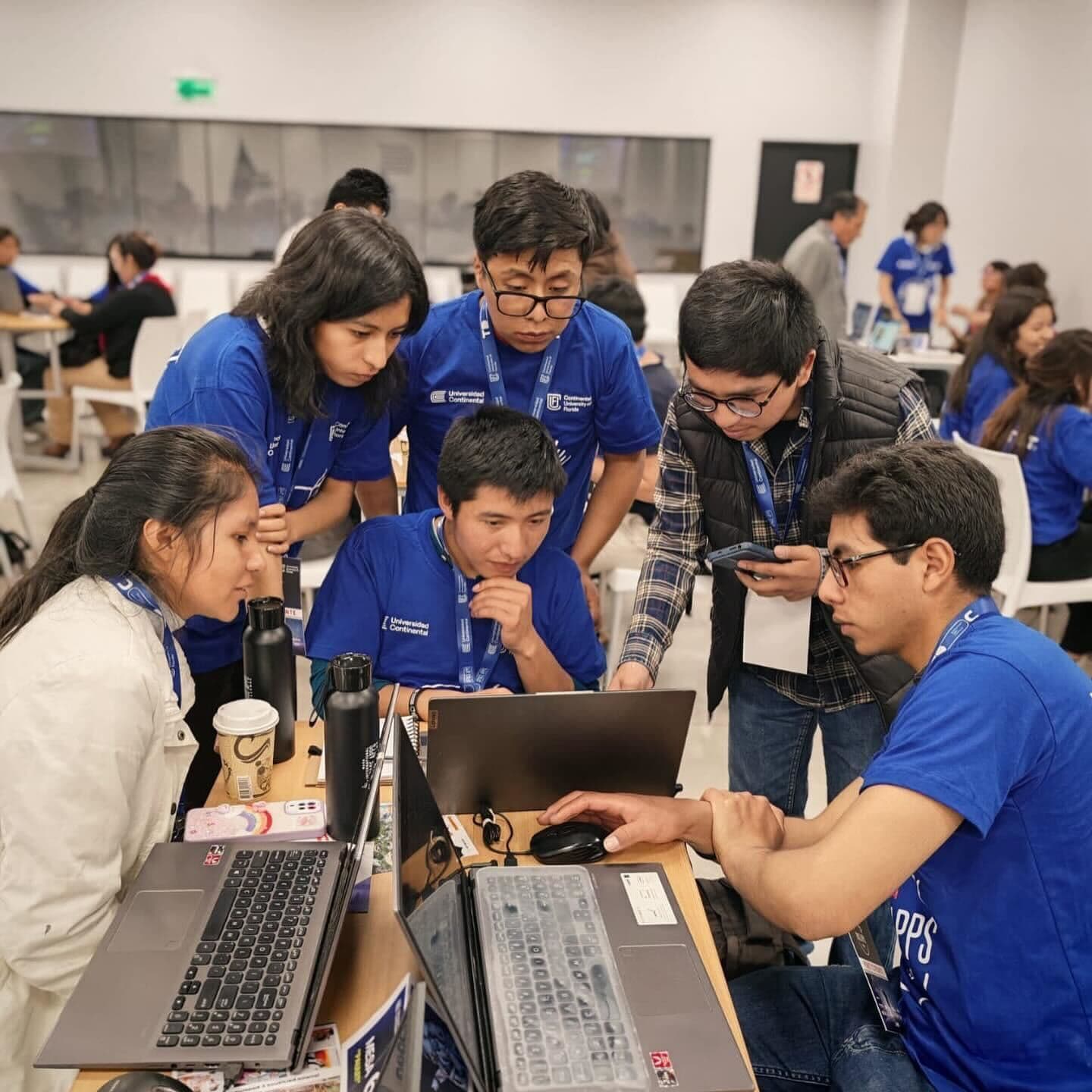
The NASA Space Apps Challenge 2026 is scheduled to take place on November 14 and 15. NASA announced it on October 15, inviting people of all ages and from different professions to participate. It’s not just a coding competition. Teams work on problems proposed around NASA’s open data and space partners; they have to come up with, document, and present a solution in a short time. For a student or club in Cameroon, the useful question is not “how to win in two days?” "But how do you get a team that can formulate a problem, verify its data, and produce something that others can understand?"
Dates to check before planning
The official platform indicates that registration will open in August 2026 and that the event will take place on November 14-15. Registration, the selection of a local or virtual event, team formation, and project submission follow a precise schedule. The rules may change, so it is important to check the official website before promising a place, a venue, or a deadline. We have not verified that a physical event is being organized in Douala for this edition. If there is no nearby venue, the platform offers a universal virtual option. It would not be fair to turn this option into an announcement of a confirmed local event.
According to NASA, the 2026 themes relate to lunar exploration, preparation for more distant missions, and the study of the universe. Some proposals address operational constraints at the Moon's South Pole, communication, or crew health; others aim to make astronomical data more accessible. A team does not need to master the entire space program. It must choose a challenge, read its data and criteria, and then reduce its idea to a testable proposal within 48 hours.
A team of six should not be composed of six identical profiles
The official platform recommends teams of six people or fewer. A group composed entirely of fast developers may be able to produce a prototype, but they may overlook data set units, accessibility, or narrative clarity. A good distribution might include someone with a scientific background, someone responsible for data and its quality, one or two people building the tool, someone focused on the interface, and someone responsible for the demonstration. These roles can be shared; they are not reserved for specific degrees.
NASA emphasizes that designers, journalists, artists, and experts from other fields can contribute. This doesn’t mean that any vague idea is worth analyzing. Everyone should bring a verifiable skill: explaining a result, conducting user tests, drawing a clear path, detecting an unrealistic hypothesis, or measuring a deviation. An inclusive team works best when tasks are explicit and important decisions are not monopolized by the person who types the fastest.
Start with the data, not with a promise
A common mistake in a hackathon is to announce a universal application before looking at the available data. Spatial data can be large, incomplete, outdated, or difficult to interpret. One must examine their license, time period, resolution, missing units, and values. A prototype rain map, for example, cannot reliably issue an alert for a street if the dataset only describes large regions or is an experimental product. The quality of a project often hinges on its ability to honestly say what the dataset does not allow.
Before the event, a team can practice on a small public game: download a sample, note the time required, produce a graph, and then explain each step in a document. Open data does not mean no work or no cost: a slow connection, storage, and computation are real constraints. A modest, well-understood, and properly cited game is better than a huge catalog that no one has inspected.
A local problem without distorting a global challenge
The 2026 themes are defined by the international program. A Cameroonian team can bring a concrete sensitivity to them: accessibility in French, use with limited connection, legible visualization on a phone, or pedagogy for less-equipped institutions. It should not claim that an official challenge is about Douala if that is not the case. The local connection can lie in the way the solution is designed and tested, while respecting the specifications of the chosen challenge.
Take an educational tool about a lunar mission. It might present a simple model of communication windows and explain what happens when the Earth is not visible from the area being studied. To make it useful in the classroom, the team should state the assumptions, provide a testable example, and include an offline-friendly, lightweight version. Another example: an interactive narrative on an astronomy map might offer accessible text descriptions and colors. In both cases, the project does not “solve” space exploration; it makes a specific aspect more understandable.
Demonstrate, document, and then move on
On the final day, a prototype may fail during the demonstration. A screenshot, saved sample data, and a backup plan can show the idea without hiding its limitations. The submission should include the sources, the media license, instructions for restarting the project, and a list of features that were actually implemented. This allows the judges to distinguish a proof of concept from a future promise. After the event, a small team may sometimes want to revise its project, get user feedback, and maintain a public repository rather than abandoning all the code.
Before presenting a NASA data set as a local response
The challenges provide powerful datasets, but these may not have the resolution or date that is appropriate for a question about a particular neighbourhood in Douala. A team studying heat, rain, or crops must first read the product sheet: unit, frequency, invalid pixels, uncertainty, and conditions of use. They can show a prototype on a sample area while explaining what would be needed to test it locally. This honesty is more convincing than a global map cropped and presented as a field diagnosis.
A good presentation also gives the user the opportunity to challenge the result. Where did the data come from? Does a new scene change the conclusion? Which number was calculated and which was entered by the team? If the prototype uses artificial intelligence, where are the errors? The short timeframe of the challenge does not excuse hiding these questions. On the contrary, a list of limitations and tests to pursue helps a jury to judge what actually exists after two days of work.
For an African team, the post-competition phase can take the form of a public workshop at a school or university. Domain experts discuss the relevance of the issue, developers fix data problems, and users explain whether the tool meets a need. This extension requires less showmanship than a final, but it transforms a one-off exercise into collective learning.
The Space Apps Challenge can be a great learning experience, provided it is not presented as a guaranteed shortcut to a career at NASA. Its most lasting contribution is practice: reading a source, collaborating with others, defending an idea in the face of criticism, and accepting what didn't work. For STEM clubs in Central Africa, these skills are also valuable outside of a competition. The event on November 14–15 is an opportunity to practice them; preparation begins now, by reading the official rules and a problem that is specific enough to be treated honestly.