
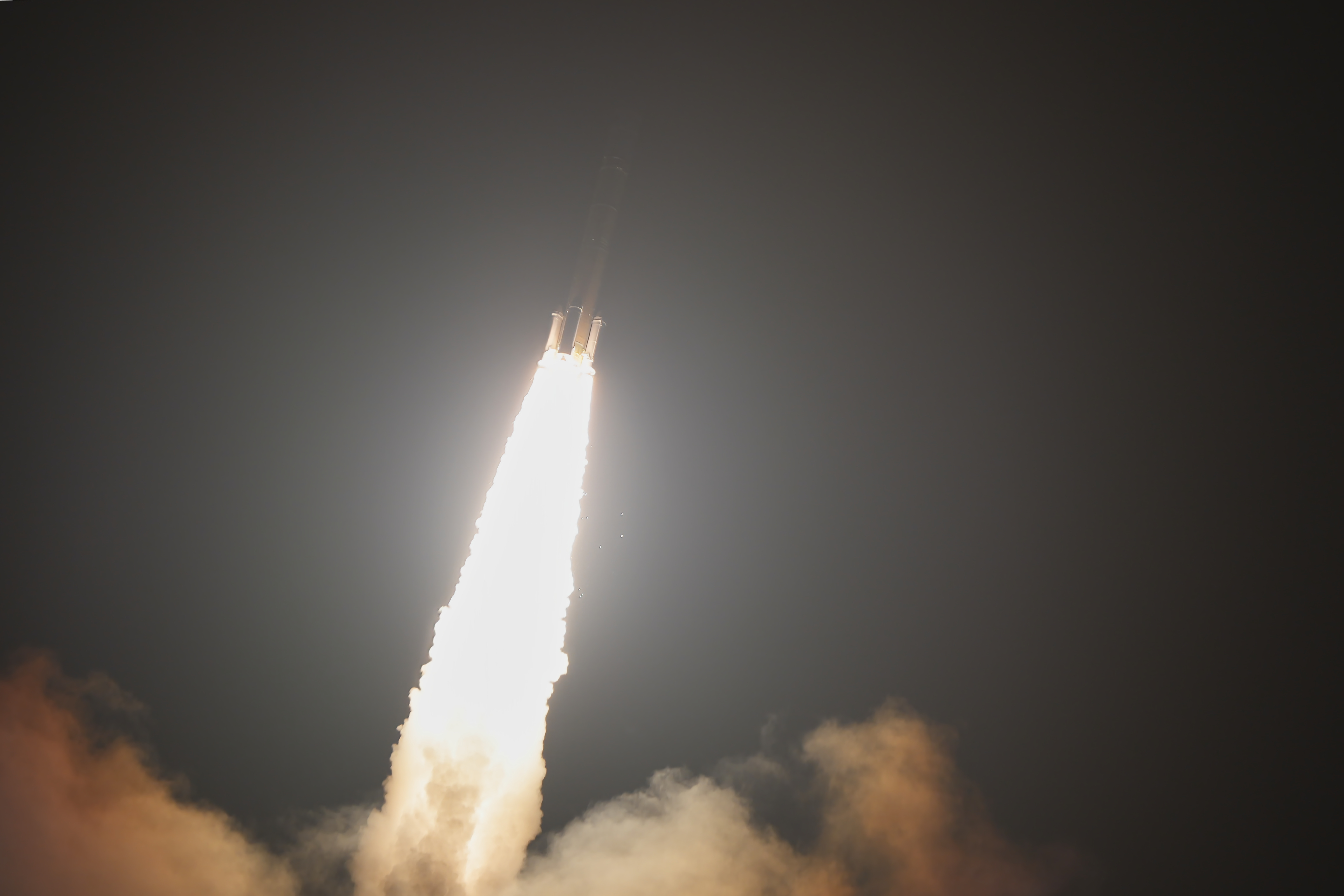
At 04:41 am Japanese time on 20 October 2026, an H3 rocket left Tanegashima with the MMX probe. JAXA reports that the vehicle followed the planned trajectory and the separation of the probe was confirmed approximately 71 minutes after takeoff. This is a successful departure, not yet a Mars landing or a Phobos survey.
Why go to the Mondays of March?
Phobos and Deimos pose an open question: are they asteroids captured by Mars or the remains of an ancient collision? MMX is to observe the two moons, approach Phobus and collect material from them. Analysis in the laboratory on Earth can reveal details that onboard instruments do not always measure.
The timetable presented by ESA envisages an arrival in the Martian system in 2027, deployment of the Idefix rover on Phobos later in the mission, a collection of samples around 2030 and a return to Earth in 2031.
The radio link, the backbone of exploration
A remote probe cannot be piloted like a ground-based drone. Teams prepare command sequences, transmit them by radio, and then wait for telemetry to describe the vehicle's status and instrument data. At a distance from Mars, the signal takes several minutes to travel each way; instantaneous corrections are impossible. Protect yourself if it detects an anomaly.
ESA has provided MMX with remote space communication equipment and support from its Estrack station network to transmit commands and receive data. A large ground antenna concentrates a very weak radio signal, while other stations, spread across the planet, take over when the Earth's rotation causes the probe to disappear from the horizon of a site. The processing and distribution of scientific data.

What the launch doesn't yet demonstrate
The successful launch validates a transport and injection stage, but it does not validate the navigation around Phobos, or the landing, or sampling, or return. Each of these phases depends on the probe, the flight crews, and the continuity of the radio link.
To understand how a signal becomes actionable information, see also our article From radio signal to useful data: what does a ground station do? in the RECA Space Journal.